Awnings are a great addition to outdoor areas for homes and commercial places. They serve both an aesthetic and practical purpose.There are various materials for awnings, and they come in all sizes and shapes to fit different places - caravans, tents, homes, and businesses.Awnings are beautiful and beneficial. They provide shade and protection from the UV light and the elements.
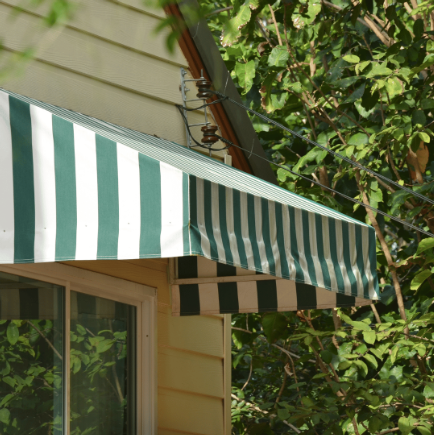
Image source: Canva
Over time, awnings accumulate dirt, debris, grime, and sometimes even organic stains caused by mold and mildew.The consequences are that the awning fades in color and loses its functionality. It is prone to wear and tear or repairs. Neglecting your awning can lead to costly replacements. But how to clean it?Power or pressure washing is an effective and fast cleaning method for numerous surfaces and cleaning tasks. However, can you power wash an awning?Read on to understand the specifics of cleaning an awning, the right and wrong ways to do it, and the advantages and disadvantages of pressure washing an awning.
Several essential factors must be considered before we evaluate the dos and don'ts of a pressure wash. They are connected to your awning material, condition, whether it is residential or commercial, the cleaning products needed, and more.Remember that there isn't a universal answer to all cleaning needs; sometimes, key considerations can play a pivotal role in determining the cleaning method.
Depending on their purpose and the enhanced qualities customers seek, awnings come in various materials and fabrics. There are cotton and canvas awnings, vinyl awnings and acrylic ones, RV awnings, and many others.The type of material is essential for the choice of a cleaning method. For example, some materials are prone to deep stains and require a cleaning solution or deep cleaning to restore their previous good looks.Others will require merely brushing off loose dirt and mild cleaning. Whatever the cleaning needs, make sure to consider the manufacturer's cleaning recommendations at all times.
If your awning is quite experienced and the condition is not in its prime and damaged, power washing might be a risky cleaning alternative.The water pressure might worsen existing age and condition issues. Weakened fabric might tear, and loose seams might come apart.
Some areas have specific rules regarding the use of power washers. Research a trustworthy local cleaning company that adheres to all cleaning regulations.
Cleaning an awning is a complex job. You don't just spray it with water and do the task. It requires a thorough understanding of the process and good preparation.Some awnings are cleaned without dismounting them from their place. Fixed awnings require special cleaning equipment and tools. If this is your case, remove all surrounding objects or cover them to minimize the risk of damage.Consult with professionals about what measures to take before the cleaning process and how to ensure safe work.
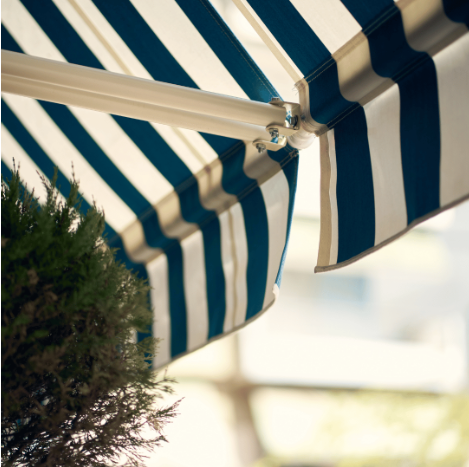
Image source: Canva
If you are a business owner, you should ask your cleaning specialist what time will be needed for a contractible awning to dry because an awning can be damaged if not stored properly.There is an increased risk of damage to the integrity of the awning if you are not skilled and dismantle it on your own. The risk of not being able to put it up together again is considerable.
The need for a cleaning solution depends on the type of stains on your awning. Mild dish soap cleaning solutions will work for more prominent stains if there is dirt and dust.Professionals use commercial fabric awning cleaners for grease, grime, algae stains, or other specific issues. The choice of an awning cleaning solution also depends on the material and fabric of your awning.
Pressure washing requires special equipment. The power wash system consists of a pressure washer machine (gas or electric), a hose (a garden hose can be attachable), a set of nozzles, and cleaning attachments and accessories.The adjustable pressure settings, the type of nozzle for the job, or the appropriate attachment depends on the cleaning job and is best determined by a skilled operator.Power washing, applied to hard-to-reach surfaces, poses risks of injuries. Slips are also a common outcome of lack of routine and skills.Hiring professionals for such delicate cleaning tasks is always advisable since they possess the right equipment and training to tackle all sorts of problems - from rust stains to cooking grease. Professional power washing cleaning companies can provide the necessary guarantees and insurance for the best results and peace of mind. That applies to both residential awnings and commercial awnings.
There are a lot of factors to consider before you begin pressure washing your awning. There are as many when it comes to determining the best and the right way of awning cleaning. Consider the fabrics and materials first. Do you have a retractable awning or not? Do you have an acrylic awning or any other type? To clean awnings correctly, you must determine whether the entire awning needs cleaning or just parts. Usually, when you hire professional cleaners, they assess the situation carefully before they proceed to a thorough cleaning.
The first step is a careful awning fabric or material inspection. Professionals look for signs of damage, tears, wear, or weakened spots. All stitches and seams are inspected to ensure their good condition and endurance. If the inspection shows any problems with your awning, they will advise you to repair it first. There are better options than a power washer in these cases.
Before they proceed with water cleaning, cleaners use a soft-bristle brush or a broom to gently remove loose debris from the awning fabric or material, such as leaves, twigs, and dirt.
Different stains affect your awning. On one hand, all organic stains, like bird droppings and grime, need a cleaning solution prepared by mixing a mild soap with water. Harsh chemicals can damage the fabric of your cotton or canvas awning.When mold or algae is on your awning, the cleaning solution depends on the material. If you have fabric awnings, mold stains are treated with specialized chemicals to ensure that microorganisms die and do not reappear. Sundry is especially helpful in these situations.If you have an aluminum awning that requires cleaning with specialized chemicals, you must carefully consider the danger of rust accumulation. Canvas awnings such as acrylic awnings or vinyl awnings can be effectively cleaned with a liquid dish soap solution if we need to remove bird poop and general dirt.Acetone or dish soap works for grease stains,
Power washing seems a good option if there aren't any signs of tear and wear. First, a test cleaning on a small area is wise.Professionals choose a small, inconspicuous area of the awning with low pressure to ensure it doesn't cause damage. If the fabric shows signs of stress or damage, avoid power washing.
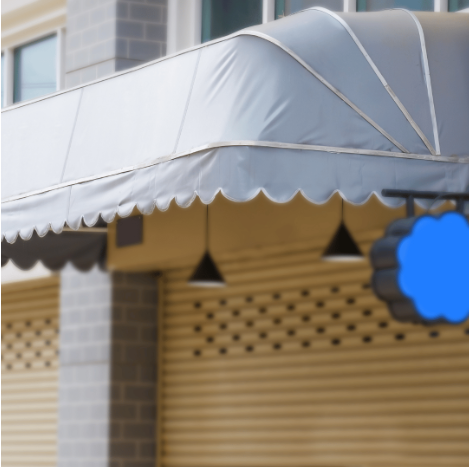
Image source: Canva
Power washing an awning is performed at a low-pressure setting with a wide-angle nozzle to ensure an even water dispersion. Professional cleaners maintain a healthy distance to reduce the risk of injury.They have the skill and expertise to operate a power washing system so that no damage is inflicted on your awning.
Professionals prevent leaving streaks by starting a wash from the bottom of an awning and progressing through the top. When you power wash, the water stream should be sprayed evenly and not concentrated for too long on a single spot.Professionals typically use sweeping motions as a proper cleaning technique.
Different stains require different treatments. When a cleaning solution is required, it needs time to sit. It is applied before power washing, and after the appropriate sit time, it is scrubbed with a soft brush or cloth.
The next step in the cleaning process is to rinse any solution or soap residue left on the fabric. Again, professionals decide on the level of water pressure applied to different types of awning material.
The awning has to be dried thoroughly before being retracted or stored. Any moisture left on the fabric might accumulate mold or mildew. The best way to dry an awning is to leave it to sundry since the rays kill microorganisms.
Clean an awning regularly and professionally to ensure the best results and longevity. The proper cleaning enhances the colors and functionality of your awning, allowing you to use it extensively.Consult professional services for advice on applying a fabric protectant or awning-specific sealer to make the surface water repellent. The awning is less likely to accumulate the same amount of stains.
Power washing can be a powerful cleaning method when applied to the right surfaces and with the proper skill and consideration. There are some definite advantages to using it, but several actions need to be avoided. Let's delve into the dos and don'ts.
Here are the most crucial dos:
Type of Awning FabricsCottonAcrylic FabricVinyl AwningMaintenance and Regular CleaningDish/Mild soap and cold water or canvas commercial cleanerDish/Mild soap and cold water or acrylic commercial cleanerDish/Mild soap and cold water or vinyl commercial cleanerCooking GreaseDish soap or a commercial cleanerDish soap or a commercial cleanerDish soap or a commercial cleanerCar GreaseAcetone or mild soapAcetone or mild soapMild soapAlgae Hydrogen peroxide in water. You spray the affected areas using an empty spray bottle.Hydrogen peroxide in waterA mixture of 30% vinegar and 70% waterNote: An organic stain remover can be used to clean natural fabric awnings. Aluminum awnings should be cleaned with a specially designed solvent.
And what about the don'ts:
Power washing an awning is a complex job that requires attention to detail. It is an effective method when performed carefully and with the required skills. From fixed awnings to portable and retractable ones - stains and dirt can be removed, restoring the awning's appearance and functionality. However, it's always best to consult with a professional if you have any doubts or concerns. We at Sky SWC are proficient in awning and pressure washing and are always happy to answer any questions.


Window cleaning of buildings in Seattle area
.svg)
.svg)
.svg)
.svg)
.svg)
.svg)
.svg)